

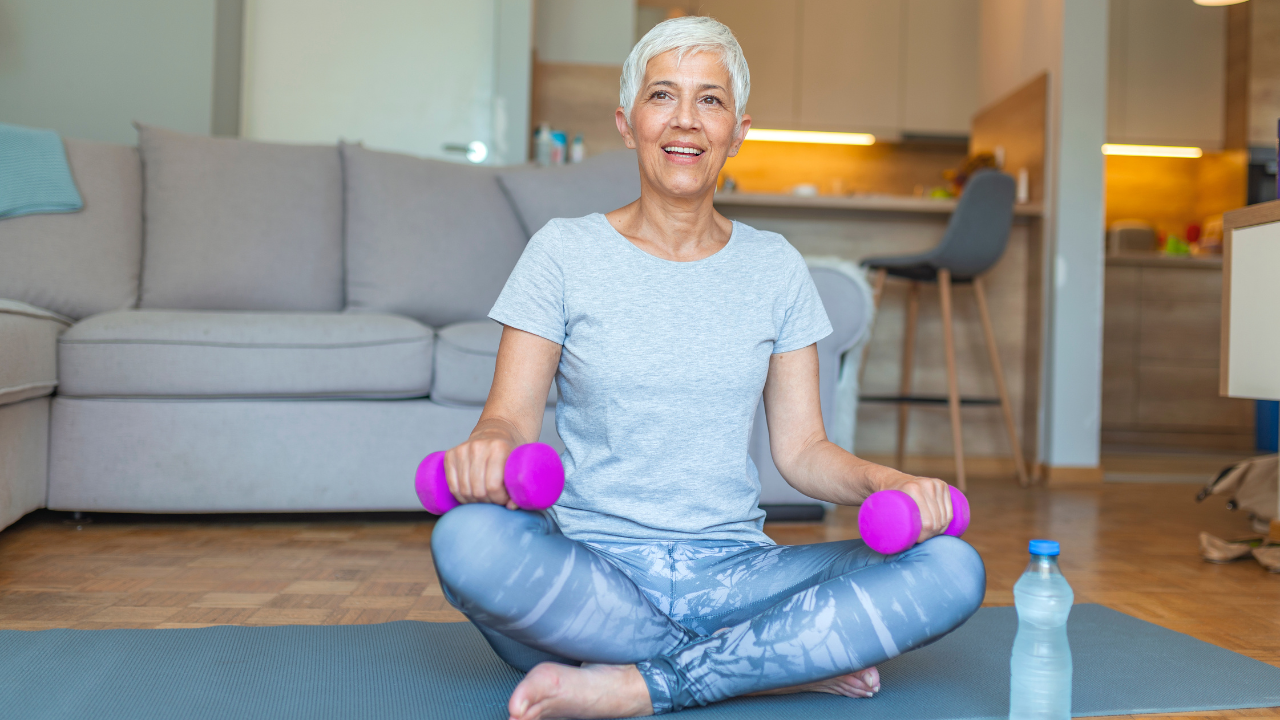
Terri Walsh’s Guide to Strength Training for Bone Density
By Terri Walsh, Online Personal Trainer and Creator of Active Resistance Training®
Terri Walsh is an online personal trainer and creator of Active Resistance Training®, helping adults over 40, women in menopause, seniors, and clients with low bone density train safely and intelligently through private Zoom coaching.
Strong bones are not built by wishful thinking. They are built through intelligent loading, consistent movement, adequate nutrition, recovery, and the kind of expert coaching that keeps your body progressing without unnecessary risk. If you have been told you have low bone density, osteopenia, osteoporosis, or simply want to age with more strength and confidence, this guide will help you understand what bone density means and how strength training for bone density can fit into a safe, elevated, and highly personal fitness plan.
For more than four decades, I have helped clients build strength, recover confidence, and train through the realities of aging, injury, travel, menopause, surgery, pain, and life stress. My work through Active Resistance Training® is never a boilerplate PDF. It is a curated, private process designed around your body, your history, your goals, and your ability to progress with precision. If you would like to learn more about my background and method, visit my online personal trainer profile or read my New York Times interview feature.
Important medical note: This guide is educational fitness content. If you have osteoporosis, a history of fracture, spinal compression fractures, balance concerns, pain, or medical restrictions, consult your physician or qualified healthcare provider before beginning or changing an exercise program.
What Is Bone Density, and Why Does It Matter?
Bone density describes how much mineral content is present in your bones. A bone density test, often called a DEXA or DXA scan, uses low-dose x-ray technology to measure minerals such as calcium in the bones and estimate bone strength and fracture risk.[1] Stronger bones are generally more resilient, while lower bone density can indicate osteopenia or osteoporosis, depending on the test result and medical context.[1]
Bone is living tissue. It responds to stress, loading, nutrition, hormones, age, illness, inactivity, and medication. That means your choices matter, but it also means your plan must be intelligent. The goal is not to punish your body into strength. The goal is to give your bones and muscles the right signal, at the right intensity, with the right recovery, in a way your body can actually adapt to.
| Bone Health Term | What It Means | Why It Matters for Training |
|---|---|---|
| Bone density | A measure of mineral content and bone strength. | Helps guide how carefully loading, impact, and progression should be planned. |
| DEXA / DXA scan | A low-dose x-ray test used to assess bone density and fracture risk.[1] | Gives you and your medical team objective information before choosing exercise intensity. |
| T-score | A comparison of your bone density to that of a healthy young adult; MedlinePlus describes -1.0 or higher as normal, between -1.0 and -2.4 as low bone density, and -2.5 or lower as probable osteoporosis.[1] | Helps identify whether your program should emphasize prevention, osteopenia support, or osteoporosis-safe modification. |
| Osteopenia | Low bone density that is not as severe as osteoporosis.[1] | Often a critical window for building strength, coordination, and lifestyle consistency. |
| Osteoporosis | A condition in which bones become weaker and fracture risk rises.[2] | Requires professional medical guidance and careful exercise selection. |
Why Bone Density Becomes a Priority After 40, 50, and 60
If you dieted aggressively in adolescence or young adulthood, avoided strength training, lost muscle, experienced menopause, used certain medications, or lived through long periods of low activity, your 50s and 60s may reveal changes that were building quietly for decades. This is especially relevant for women entering perimenopause and menopause, but it also matters for men over 50 and anyone recovering from illness, injury, or weight loss.
The opportunity is that you are not powerless. While exercise does not guarantee prevention or reversal of osteoporosis, resistance training, weight-bearing activity, posture work, and balance training can help support bone strength, muscle mass, coordination, and fall prevention when they are done consistently and appropriately.[2] [3]
This is why I encourage adults over 50 to know their numbers, understand their DEXA results, and train from reality rather than guesswork. If this stage of life is your focus, you may also find my guides on online personal training for women over 50 and personal training for seniors helpful.
How Strength Training Supports Bone Density
Strength training matters because muscles attach to bones through tendons. When you lift, push, pull, squat, hinge, carry, or resist force, your muscles create mechanical tension. That tension gives bone tissue a reason to maintain or improve its structure. Federal health guidance from NIAMS identifies strength or resistance training as one of the best physical activities for bone health, alongside weight-bearing and balance-focused exercise.[2] [3]
The most effective bone-density program is rarely one single exercise. It is a thoughtful system that combines resistance, weight-bearing movement, balance, posture, flexibility, recovery, and nutrition. For many clients, this is where private coaching is invaluable: the exercise must be challenging enough to create adaptation, but controlled enough to respect joint health, spinal safety, and fracture risk.
| Training Element | Examples | Bone-Density Value | Coaching Consideration |
|---|---|---|---|
| Progressive resistance training | Dumbbells, machines, resistance bands, bodyweight strength work | Supports muscle and bone loading.[2] [4] | Progress gradually; prioritize technique before heavier loads. |
| Weight-bearing exercise | Walking, stair climbing, hiking, dancing, low-impact aerobics | Helps bones respond to bodyweight loading.[3] [5] | Choose low-, moderate-, or higher-impact options based on bone status and medical guidance. |
| Balance training | Step-ups, controlled lunges, weight shifts, tai chi-inspired drills | Supports coordination and may help reduce fall risk.[3] | Essential for clients with osteoporosis, seniors, or prior falls. |
| Posture and upper-back strength | Rows, wall slides, scapular control, spinal-extension work | Supports alignment, shoulder mechanics, and safer daily movement.[4] | Especially important for people with rounded posture or spinal concerns. |
| Mobility and flexibility | Hip mobility, ankle mobility, gentle chest opening | Supports better mechanics and confidence in movement. | Avoid aggressive spinal flexion or twisting if osteoporosis risk is present.[4] |
Weight-Bearing Exercise vs. Strength Training: You Need Both
Many people hear “weight-bearing exercise” and think walking is enough. Walking is valuable, especially for consistency, cardiovascular health, and daily movement. However, walking alone may not provide enough progressive loading for the upper body, hips, spine, or major muscle groups. Bone-health organizations consistently distinguish between weight-bearing exercise and muscle-strengthening exercise, because each contributes something different.[3] [5]
Weight-bearing exercise means your body works against gravity while you are on your feet. Strength training means your muscles work against resistance. For bone density, the sophisticated approach is not to choose one. It is to combine both, then personalize the plan based on DEXA results, balance, joints, pain history, age, training experience, and confidence.
| If Your Goal Is… | Prioritize This | Why |
|---|---|---|
| Building foundational strength | Resistance training two or more days weekly, as appropriate | Muscle-strengthening exercise is included in federal activity guidance and bone-health recommendations.[3] |
| Supporting hip and leg bone loading | Squats, sit-to-stand, step-ups, lunges, stair work, walking progressions | Lower-body loading supports practical strength for daily life. |
| Improving posture and spinal support | Upper-back strength, rows, controlled extension, core stabilization | Mayo Clinic highlights strength training as useful for posture and support, while warning against unsafe bending and twisting in osteoporosis.[4] |
| Reducing fall risk | Balance drills, gait control, single-leg progressions, controlled transitions | NIAMS identifies balance and coordination as part of fracture-prevention support.[3] |
| Returning after low activity or injury | Low-impact weight-bearing work and conservative resistance | Safety and consistency come before intensity. |
What Exercises Help Increase Bone Density Safely?
There is no universal “best exercise” for every person with low bone density. The right exercise depends on your DEXA results, fracture history, posture, pain, balance, movement skill, medical advice, and training background. That said, the following categories commonly appear in bone-health guidance and can be adapted for many clients when properly coached.[2] [3] [4] [5]
| Exercise Category | Examples | Best For | Safety Notes |
|---|---|---|---|
| Lower-body strength | Squats, sit-to-stand, step-ups, split squats, hip hinges | Hips, legs, glutes, balance, functional independence | Hinging and depth should be coached carefully if there is spine or hip concern. |
| Upper-body strength | Rows, wall pushups, elevated pushups, presses, band pulls | Posture, shoulders, upper back, daily strength | Start with controlled ranges and excellent alignment. |
| Core stabilization | Dead bug variations, bird dog, anti-rotation presses, breath-led bracing | Spinal support and movement control | Prioritize stabilization over sit-ups or aggressive spinal flexion. |
| Low-impact weight bearing | Brisk walking, stair climbing, low-impact dance, hiking on level terrain | Consistency, cardiovascular health, leg loading | Increase duration and terrain gradually. |
| Balance and coordination | Weight shifts, tandem stance, supported single-leg work, controlled carries | Fall prevention and confidence | Use support when needed; safety is the first priority. |
| Power and impact progressions | Heel drops, light hops, quick step-ups, higher-impact work | Selected clients with adequate readiness and medical clearance | Not appropriate for everyone; high fracture risk requires professional guidance. |
Classic exercises such as kettlebell swings, pushups, squats, deadlifts, and shoulder presses can be useful for some clients, but they are not automatically appropriate for everyone. The exercise is only as good as the form, progression, context, and body performing it. In a premium private program, I choose and modify exercises based on you, not on a generic list.
What Exercises Should You Avoid With Osteoporosis?
If you have osteoporosis, a history of spinal compression fracture, or high fracture risk, the question is not simply “what should I do?” It is also “what should I not do yet?” Mayo Clinic cautions that people with weakened bones may need to avoid high-impact exercise, jerky rapid movement, and bending or twisting at the waist, including movements such as toe touches and sit-ups.[4]
This does not mean you should become afraid of movement. It means your program should be curated. A safe osteoporosis exercise plan often emphasizes controlled strength, upright posture, hip-dominant movement, supported balance work, and careful spinal alignment. You can still become stronger, more capable, and more confident, but the route should respect your medical reality.
| Movement Pattern | Why It May Need Modification | Safer Training Direction |
|---|---|---|
| Repeated loaded spinal flexion | May be inappropriate for some people with osteoporosis or spinal fracture risk.[4] | Core stabilization, hip hinging, supported posture work. |
| Fast twisting under load | Can create forces the spine may not tolerate well in high-risk clients.[4] | Slow anti-rotation strength and controlled mobility. |
| High-impact jumping or running | May be inappropriate for weakened bones or fracture risk.[4] | Low-impact walking, stair work, or carefully progressed impact only with clearance. |
| Heavy lifting without coaching | Poor form may increase risk and reduce benefit. | Technique-first progressive resistance training. |
| Balance drills without support | Fall risk may outweigh benefit if poorly set up. | Use a wall, chair, rail, or trainer-guided setup. |
How Much Weight Should You Lift for Bone Density?
The right weight should feel challenging, controlled, and repeatable without pain, panic, or form breakdown. For many clients, I begin with a load that allows excellent technique and then progress gradually. If a weight feels effortless, it may not provide enough stimulus. If it forces you to compensate, twist, hold your breath aggressively, or lose alignment, it is not the right weight today.
A smart progression often looks like this: first improve movement quality, then increase repetitions, then increase resistance, then refine tempo, range, or complexity. For bone density, consistency and progression matter more than ego. The goal is not to prove how heavy you can lift once. The goal is to train in a way that your bones, muscles, joints, and nervous system can adapt to over time.
Nutrition for Bone Density: Calcium, Vitamin D, Protein, and Recovery
Strength training is powerful, but it does not work in isolation. Your body needs the raw materials to build and maintain tissue. MedlinePlus notes that low bone density recommendations may include exercise as well as calcium and vitamin D.[1] Protein also matters because muscle is the active tissue that helps you lift, stabilize, balance, and move through the world with confidence.
For many adults, especially women over 50 and clients rebuilding after illness, under-eating can be a hidden barrier. If you are not eating enough calories, protein, and micronutrients, your body may struggle to build muscle or recover from training. A common baseline protein reference is approximately 0.8 grams per kilogram of body weight per day for generally healthy adults, although individual needs may vary based on age, training, medical status, and physician or dietitian guidance.
| Nutrition Priority | Why It Matters | Practical Direction |
|---|---|---|
| Calcium | Key mineral in bone structure.[1] | Discuss intake and supplementation with your healthcare provider. |
| Vitamin D | Helps support calcium-related bone health.[1] | Ask your medical provider whether blood testing or supplementation is appropriate. |
| Protein | Supports muscle repair and strength development. | Include protein across meals, especially if training regularly. |
| Adequate calories | Training adaptation requires energy. | Avoid chronic under-fueling, especially during menopause, recovery, or weight loss. |
| Rest and recovery | Bone and muscle adaptation happen between sessions. | Sleep, hydration, and planned recovery are part of the program. |
If you want more structured meal support, my private online personal training clients receive monthly recipe packs and meal-planning resources through the A.R.T. Virtual Studio Membership. You can also explore the A.R.T. online fitness program and class library or visit the Active Resistance Training® shop.
How Often Should You Test Bone Density?
If you are over 50, in menopause, have fracture risk factors, have a family history of osteoporosis, or have been told you have low bone density, it is worth discussing bone-density testing with your healthcare provider. MedlinePlus explains that DEXA scans can help diagnose osteopenia or osteoporosis, predict future fracture risk, and monitor whether treatment is working.[1]
Testing frequency is a medical decision. Your physician may recommend a schedule based on your age, T-score, fracture history, medications, family history, and whether you are already being treated. The important point is that your training should be informed by facts. If you know your bone-density status, your program can be more precise.
Enter Online Personal Training With Terri Walsh via Zoom
Private online personal training is ideal for clients who want expertise, privacy, convenience, and personalization without being processed through a generic fitness system. My Zoom sessions are face-to-face, hour-long, and fully customized. I do not send you a boilerplate PDF. I build a program on you, about you, and for you.
We typically meet a minimum of twice weekly, with additional workouts chosen around your schedule, preferences, and needs. You also gain access to online fitness content, livestream classes, monthly recipe releases, and accountability support. The point is custom means exactly that: custom.
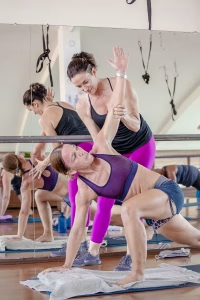
Strength Training for Bone Density Osteopenia Osteoporosis
Fitness Assessment
We begin with a thorough fitness assessment to understand where you are, how you got there, what your body is telling us, and where you want to go. If bone density is part of your concern, we discuss your DEXA results, medical guidance, fracture history, pain, balance, training experience, and confidence with movement.
Training Modalities
Your plan may include carefully selected combinations of endurance, flexibility, strength training, barre, Pilates-inspired work, mobility, body-weight training, yoga-informed movement, posture work, balance drills, and Active Resistance Training®. The blend changes as your body changes.
Nutrition, Tracking, and Accountability
We can work closely on nutrition, meal planning, and accountability. Some clients want detailed tracking. Others prefer a more intuitive process. I know how to track progress manually, with fitness technology, or with a hybrid approach. The goal is to help you understand your body’s cues and build sustainable competence.
If you are ready to begin, complete the consultation request form. I will be excited to learn more about you and help you train with intelligence, strength, and confidence.
Also Included: A.R.T. Virtual Studio Membership
Online personal training also includes access to online fitness content, including livestream classes, OnRamp, Newbie Series, Fundamentals, Beginner Series, A.R.T. Mat 1.1–28.4, Holis Series, Stretch & Mobility, Components, MasterClasses, Prescriptives, and other releases. You can practice on your schedule, stream classes to your devices, and choose from beginner, intermediate, and advanced options.
You also receive monthly EAT WELL Recipes by Terri Walsh, a practical collection of easy-to-make meals with accessible ingredients. The recipe packs include printable PDFs, step-by-step recipes, breakfasts, lunches, dinners, desserts, shopping lists, snack smoothies, protein fruit bowls, and a meal-planner calendar. For updates and new resources, you can subscribe to the newsletter.
Client Experience: Rebuilding Strength After Bone Density Loss
The following testimonial from Dianne speaks directly to the level of customization required when strength, injury, fracture history, and confidence all intersect:
“I lost too much weight in the hospital. I weighed in at 103, with accelerated bone density loss due to mitigating circumstances. Terri’s mission then was to build me back up — damn near from scratch. Terri’s carefully planned and measured workouts rebuilt my musculature completely. I had five compression fractures in my back — and Terri worked a program to help me heal it all. It took a year, but we got me literally put back together again.”
— Dianne Houston, Writer/Director
This is the difference between a generic workout and a coached method. When the body has been through injury, illness, weight loss, or bone-density changes, training must be careful, progressive, and deeply personal.
Frequently Asked Questions About Strength Training for Bone Density
What is the best exercise to increase bone density?
The best approach is usually a combination of progressive resistance training, weight-bearing exercise, balance work, and posture training. NIAMS identifies weight-bearing exercise, resistance training, and balance training as important categories for bone health.[3] The best plan for you depends on your DEXA results, medical history, fracture risk, and movement ability.
Is strength training safe if I have osteoporosis?
Strength training can be part of an osteoporosis-safe exercise plan, but it must be individualized. Mayo Clinic recommends guidance from a physical therapist or personal trainer experienced with osteoporosis and warns that some people should avoid high-impact movement, rapid jerky motion, and bending or twisting at the waist.[4]
What is a bone density test?
A bone density test, also called a DEXA or DXA scan, is a low-dose x-ray test that measures minerals in the bone. It can help diagnose osteopenia or osteoporosis, predict fracture risk, and monitor whether treatment is working.[1]
How do I read bone density results?
Bone-density results often include a T-score and may include a Z-score. MedlinePlus explains that a T-score of -1.0 or higher is considered normal, between -1.0 and -2.4 indicates low bone density, and -2.5 or lower indicates probable osteoporosis.[1] Your physician should interpret your results in the context of your full health profile.
How long does it take to build bone density?
Bone adaptation is gradual. Most people should think in months and years, not days and weeks. Training consistency, nutrition, recovery, medical status, hormones, medications, and baseline bone density all influence progress. The goal is to build a sustainable program that can support bone and muscle health long term.
Can walking alone improve bone density?
Walking is valuable weight-bearing activity, but it may not be enough by itself for a complete bone-density program. A stronger plan often includes resistance training for the upper and lower body, posture work, and balance training.[3] [5]
What exercises should people with osteoporosis avoid?
Some people with osteoporosis may need to avoid high-impact exercise, fast jerky movement, and repeated bending or twisting at the waist, such as toe touches or sit-ups.[4] The safest approach is to ask your healthcare provider for restrictions and work with an experienced trainer who can modify movements.
How can women over 50 increase bone density naturally?
Women over 50 can support bone health with strength training, weight-bearing activity, balance training, adequate protein, calcium, vitamin D, sleep, and medical guidance when needed. Exercise and nutrition support bone health, but they do not replace medical evaluation or treatment for osteoporosis.[1] [2]
Are weight machines useful for bone density?
Weight machines can be useful because they provide measurable resistance and may help some clients train with more control. Free weights, bands, bodyweight movements, and machines can all have a place in a well-designed resistance-training program.[3] [5]
How do I start if I am afraid of getting hurt?
Start with assessment, medical clearance when appropriate, and expert coaching. A safe beginning may include supported sit-to-stands, wall pushups, light rows, balance drills near a stable surface, walking, and gentle mobility. The goal is to build confidence through precision, not overwhelm your body with intensity.
Personal Invitation: Train for the Body You Want to Live In
Bone density is not just a scan result. It is part of how you stand, walk, lift, recover, travel, work, age, and participate in your life. If you want a strong body, you need a plan that respects the whole body: bones, muscles, joints, balance, nutrition, recovery, confidence, and personal history.
If you are ready for private, high-level support, I invite you to complete the consultation request. We will build a program that is intelligent, personal, and designed to help you move forward with strength.
ALSO INCLUDED: A.R.T. Virtual Studio Membership
Online personal training also includes all the online fitness content: LiveStream Classes, OnRamp, Newbie Series, Fundamentals, Beginner Series, ART Mat 1.1-28.4, Holis Series, Covid Series LIVE, Stretch & Mobility, Components, MasterClasses, Prescriptives, New Series, and 2021 Releases,
- Practice on your schedule.
- Classes stream to all devices.
- Over 450+ classes, workouts & series.
- Beginner. Intermediate. Advanced.

Monthly Recipe Packs & Meal Plans
EAT WELL Recipes by Terri Walsh, a monthly compilation of delicious, easy-to-make recipes with easy-to-find ingredients. You’ll save time with meal prep, and all your macros are available with a scan code for myfitnesspal – so you can track to your heart’s content or not. And…again…they’re EASY AND DELICIOUS. They include:
- New recipe pack every month
- Printable PDF’s
- Simple recipes, step by step
- Breakfasts, lunches, dinner and deserts!
- Accommodates gluten-free, dairy-free, meat-free
- Shopping lists
- Snack smoothies and protein fruit bowls
- Meal planner calendar


Client Testimonials & Reviews
Terri Walsh has spent four decades transforming bodies and changing lives, and her clients say it best. From Oscar winners and CEOs to everyday people navigating menopause, injury, and midlife reinvention, these testimonials reflect the real results of Terri’s Active Resistance Training® method: stronger bodies, renewed confidence, and a smarter approach to fitness that lasts.

I’m on my fourth body with Terri. Let me explain: I started with Terri weighing 25 pounds more than I wanted to, and desiring to feel strong and fit again. When she asked me to name one specific goal, I told her I wanted to be able to do a perfect pushup. A few short months later, I was down 15 pounds and was up to 30 “perfect pushups”- 3 reps of ten. It was around that time that I had a terrible accident and shattered my left wrist. In addition to being in constant pain, my equilibrium was in turmoil. This began body number 2. Terri worked out a training plan to keep me fit and moving toward my goal, without endangering my wrist, and also made sure the arm and shoulder muscles on my left side stayed a part of the action. I lost zero strength. Once the multiple breaks were healed, Terri retrained the wrist. Unfortunately, that same year, I had to go in for an emergency gall bladder surgery, which was successful , but the findings from that surgery necessitated a second surgery- this one more intense. Terri and I trained to get my strength up to maximum fitness, so that I could recover better from that second surgical intrusion, and thanks to her, I did. I had a very long hospital stay, during which Terri accompanied me via zoom on increasingly long walks around my ward. She kept me strong. My surgeons acknowledged that it was the workouts, my prior conditioning, and my determination to heal that got me out of there.
Enter body number 3: I lost too much weight in the hospital. I weighed in at 103, with excellerated bone density loss due to mitigating circumstances. Terri’s mission then was to build me back up- damn near from scratch. Terri’s carefully planned and measured workouts rebuilt my musculature completely. I had five compression fractures in my back- and Terri worked a program to help me heal it all. It took a year, but we got me literally put back together again.
Body number 4: I am now at the perfect weight, with high flexibility, and actually impressive strength. Body number four is healed, and getting stronger daily. Pushups? Not yet. But we’ll get there.
For nearly three decades Terri Walsh and her sophisticated and innovative A.R.T. technique have recovered and restored my body several times over. From getting my sexy back after a breakup in my mid thirties, to managing peri and post menopausal hormonal mayhem, to just recently in my early sixties, relearning motor skills and muscle replacement after a bilateral lung transplant, Terri has met me where I was and carried me to full restoration with her brilliant adaptive practice and disciplined patience. She pays acute detail to technique and anti injury movement, building muscle, balance and stamina with full safety. She brings a high physical intelligence, a rare intuition, downtown NY sense of humor and a genuine sense of empathy to her work- a unique, authentic talent in the fitness and wellness industry. Simply put Terri has made me look and feel damn good for a long damn time.

Terri Walsh is one of the most knowledgeable trainers I have worked and I have worked with many. I’ve been working with her for nearly four years. Her command of anatomy, physiology, nutrition, and movement is exceptional, and she brings all of it to bear in every session. What sets her apart is how she applies that knowledge to the realities of aging bodies, including the hormonal and skeletal changes that matter enormously for postmenopausal women and men navigating the same terrain.
My bone density has increased eleven percent over five years, and I credit Terri’s programming with most of that result. She works entirely remotely, accommodates her clients’ schedules with real flexibility, and designs plans she will modify on the spot based on how you are actually feeling that day. She is direct, caring, and quietly demanding. She will not let you coast, and she will measure whether you are progressing. If you are serious about your body and your longevity, Terri Walsh is serious about you.
I was 55 years old and was tired of my body not being able to function properly. I had lost over 100 lbs over the previous 18 months, but my body still always hurt and I was very limited in my movement and activity. My knees were especially bad b/c I played college basketball and had multiple surgeries on my knees over the years. Also getting up to 420 lbs and being 6’6” that was significant wear and tear not only on my knees but the other joints in my body. I needed to find someone to train me so that I could relearn how to use my body.
I was more excited than nervous or skeptical. I did my research and understood how expertly trained Terri was and how many years of experience she had in training individuals like myself. I knew if there was anybody that was going to be able to get my body functioning on the level I need to play golf and go surfing, it was going to be Terri. And I was not disappointed. Even from our very few sessions I knew I had found what I needed. Terri is not only an expert in fitness and training she truly understands movement and how it is applied throughout the body. And she has a very individualized training program that builds from the ground up allowing me to slowly and progressively increase and improve my movements, strength, balance and endurance. I literally could not ask for a more perfect teacher/trainer.
I learned how incredibly poorly my body was functioning. Since I had gained so much weight for so many years, I had to retrain my body how to move, use muscles and learn balance and form that was much different 120 lbs lighter. Terri perfectly explained what was happening and what I needed to do to apply and improve the movement and functions that had deteriorated over the years. As a physician I was able to apply my medical knowledge with the vast amount of knowledge Terri was sharing with me and everything made perfect sense.
The way I move and feel now on a daily basis is over 10X better and more effective and efficient than before I started with Terri. And I am still growing and improving with her every week. Even after over 12 months of training, I am still learning from Terri and look forward to moving with the flexibility, power and balance of someone 20 years younger than me. And I know with absolute certainty I will reach that goal with Terri.
I would and do recommend ART with power and conviction. Terri’s expertise, patience and individualized plan for each client is absolutely life changing. I would absolutely not be where I am right now without Terri. Do yourself a favor and give her a chance. You will thank yourself for the next 10-20 years!

Terri Walsh is an extraordinary trainer.
I have trained with Terri for nearly twenty years. When I first came to her, I had recently retired from a lifetime as a professional dancer, had two children in my late thirties and early forties, and was entering perimenopause. My body was no longer responding in the way I was used to, and I felt out of shape in a way that was unfamiliar and unsettling.
I did not want to turn to fad diets, even though they could be tempting, or work with overzealous trainers who had far less body experience than I did. I had already been injured by that kind of approach. What I wanted was someone with solid knowledge, skill, and understanding.
Finding Terri was my lucky break.
Terri helped me get stronger, lose fat, and gain muscle, and she was constantly encouraging. She brings an incredible wealth of body and nutrition knowledge from her many years in the fitness industry, but what makes her truly exceptional is the way she personalizes the work. Her workouts, including her own ART Method, have always challenged me physically while remaining intelligent and creative. If I am dealing with pain, an injury, or some other physical issue, she is able to tailor our work immediately and expertly around whatever I am going through.
In my fifties, I was invited to perform a series of solo dance shows in Edinburgh, Scotland. I was in good shape, but I needed to get back into “dance shape” for a demanding run of back-to-back solo performances. Terri was there for me all the way. Because of her training, I was able to perform all 13 shows to critical acclaim, without pain or injury.
Now, in my early sixties and post-menopause, I continue to work with Terri. Our sessions are still fresh, fun, and deeply strengthening, but the emphasis has evolved to meet the needs of a post-menopausal woman. This is one of Terri’s great gifts: she understands that bodies change, and she knows how to train with intelligence, respect, and precision at every stage of life.
I do not foresee ever stopping my work with Terri. She is knowledgeable, intuitive, encouraging, and endlessly creative. I recommend her with complete confidence and gratitude.
ART has not only changed my life, but has saved it.
For a long time I was trapped in a cycle of disordered eating and behaviors, self hate, and dysmorphia.
Doing the same harmful things over and over, terrified of shifting my mentality, and only viewing exercise as a punishing means to an end I would never reach. One day I woke up and asked Terri if I should delete my calorie counting app, and she held my hand in that pivotal moment. Through covid we worked together to reach new goals, break old habits, and instill a self confidence I didn’t know was possible.
Three years later l’ve become one of those people who works out for health, performance, and strength.
Together we build the body I’ll be in for the next chapters of my life – Looking hot was just a great side effect of mental growth.
This practice will change you, and if you’ve ever struggled like me, it could save you.

I came to Terri wanting to improve my overall health, build strength, increase muscle mass, tone up, and lose some weight, but I’ll admit I was skeptical she could help me trim my waist, since nothing else had worked before. She proved me wrong. Not only did I tone up and shrink my waist, but she also transformed the way I work out entirely. I had been stiff and regimented in my approach, and she introduced flexibility, mobility, and functional movement that changed how I feel day to day. Terri is knowledgeable, effective, and genuinely invested in helping you reach your goals. If you’re on the fence, just sign up, she knows her stuff, and she delivers results.

In 2024 I went searching for NYC based trainers who were experienced in working with menopausal women over 50. Terri popped up at the top of the search. I’ve been working with her for over 2.5 years. From our very first consultation to our 3 sessions a week, she has become a trusted and devoted part of my life and my health and fitness journey. It makes no difference that I am in NYC and Terri is in Costa Rica. Our Zoom sessions are personalized to my needs, challenging and diverse. Terri is expert at describing, demonstrating and tweaking the exercises in real time to make sure that I am doing them properly and safely. Terri has
taught me so much about fitness and nutrition for my stage in life and she also provides workouts I can do outside of our scheduled sessions and recipes and nutrition advice. She has helped me lose weight, lose inches and more importantly, she has improved my mobility and I have built up muscle, endurance and overall flexibility. She is understanding of the needs of working professionals and is very flexible and supportive when I have to travel. We always find
a way to adapt our schedules when needed.She is truly an expert in her field and a very special person. I cannot recommend her highly
enough.

Results. That is what I was looking for and exactly what Terri delivers! I was doing a lot of things right but with menopause, I was not seeing the changes that I wanted, and Terri was the perfect fit to provide amazing customized workouts and tons of supportive advice that have made a huge difference. Her vast high level training experience and wealth of knowledge in all aspects of physical conditioning, especially the unique challenges of menopause, including nutrition. tracking devices and supplements, among other elements, is priceless. I’ve been working with her for a year and a half, and she has addressed everything from sleeping to workouts with such an encouraging and engaging style that I really look forward to our sessions and being held accountable in such a positive and enjoyable relationship. She personalizes every session based on where I am and has incorporated unique moves to help my golf game and even adjusted movements to facilitate recovery of a broken arm with no loss in function! It’s been a pleasure to get to know her and I highly recommend Terri to everyone looking to get started and get results!

I was 50 years old with 3 teenaged kids when I found Terri Walsh. I had never had any success sticking to a regular exercise program, had gained a lot of weight, couldn’t stop myself from constant snacking. I hated the way I looked and felt, was sick all the time, and had little faith I would ever be able to change any of it. I could see menopause quickly approaching and knew I needed a new approach. Terri immediately understood what I needed to do to turn things around: start focusing on protein in my vegetarian diet (which immediately cut down on my cravings), begin exercising in a way that felt doable and not punitive (focusing on strength building over high-intensity cardio), and eliminate gluten from my diet (which immediately reduced my stomach bloating). Through our work together online and using her vast library of pre-recorded workouts, I have been able to transform my body, stick to a regular workout plan for almost 2 years, and feel healthier than ever. The best thing about working with Terri is how much experience she brings to our workouts and how much knowledge she shares around nutrition, lifestyle changes, health concerns, and everything associated with being a middle-aged woman. She is supportive, non-judgemental, and down-to-earth, which has allowed me, for the first time in my life, to embrace and maintain regular exercise, and finally envision a life for myself in which I prioritize self-care. Thank you, Terri!

Working with Terri is incredibly effective. For three years I traveled all over the world with rather unpredictable schedule. Having Terri accessible over
Zoom has been the only constant routine I look forward
to.
She’s so skilled and adaptive – always able to find something in my surroundings to use as exercise devices no matter where. I worked quite a bit on specific things with Terri – surf training, posture adjustments, restorative and pain management from sports. Her method is so solid that I always have it in my practice even when I work out on my own.
Terri is so supportive. Stern so you improve, and always so encouraging. At 46, exercise is such an important part of health. I so appreciate how far I have come with her support.

Terri Walsh is a truly excellent trainer.
Outstanding master of her craft; incredibly bright with a treasure trove of health and fitness knowledge; expert and creator of Active Resistance Training which encompasses knowledge based in dance, yoga, martial arts, weight training; and a warm, spontaneous personality that make workouts fun. She is the perfect combination of tough (“Terri you are KILLING me!”) and warm (“Valerie, you are doing SO well”), and she works with the whole person — mentally, emotionally and physically. Because of her efforts, I am stronger and more flexible, I have better balance and most importantly, she provides the perfect scenario for success and sets foundations for a new healthier lifestyle.
Terri is brimming with the brains to help anyone achieve the brawn. She’s the real deal in an industry full of “wannabes” and is the standard by which any trainer should be measured.

Terri Walsh is an artist and bodies are her canvas. Terri has been a fixture in my life for over 20 years, and she is my go-to whether I need to get into top shape for a special event or to recover from an injury. And she has never let me down.
What ladore about her & her technique is that she can give you a low-impact workout that you feel for days… Anyone can get your heart rate up by making you do mountain climbers. There is no ART to that. But Terri ensures her training combines sculpting and cardio and has honed her technique for years. She is a master teacher.
Whatever you want: to get those six-pack abs you’ve been craving, to lose a few pounds, or to get your fitness to the next level – Terri is your answer.
You will not regret it.

Terri is fantastic. She is an innovative, results-driven, and dedicated fitness expert. I highly recommend working with her!

There’s nothing more challenging than trying to get fit after 50. I had taken a 10 year hiatus from working out and lost muscle mass, flexibility and strength. Coupled with some recent medical challenges, I was in the worst shape of my life. Working with Terri these last few months have been transformative. She is an “all-in-one” trainer: part trainer, part physical therapist, part dietitian and part motivational life coach! Her decades of experience makes her a wealth of knowledge, highly personalizing her approach to your body, your needs and your goals. I was nervous about getting back into shape and hesitant about working remotely with a trainer but she eased all that.
Even remotely, she is able to see every detail, correct posture, breathing and body position. It’s as if she is there in the room with you!
Terri’s Active Resistance Training is everything you need to achieve your health and fitness goals.

In the electric buzz of late 80’s & 90’s New York City, amidst neon signs and bustling streets, one name stood out in the realm of personal training: Terri Walsh.
Now, in the tranquil beauty of Costa Rica, her legacy of unparalleled fitness expertise shines brighter than ever.
Age might be just a number, but in Terri’s case, it’s a testament to her profound understanding of health and the human body. Just turned 60, she not only epitomizes vitality but also inspires it in evervone around her. Her extensive experience, traced back to those davs when she electrified the NYC fitness scene, is palpable in every training session, every piece of advice, and every transformation she facilitates.
Loyalty is an oft-used word, but with Terri, it’s a lived experience. Her unwavering commitment to her clients, irrespective of their fitness levels, is genuinely heartwarming. Whether you’re a novice taking your first steps or an athlete pushing boundaries, she’s there, steadfastly guiding, supporting, and cheering for you.
Her open-minded approach is the cherry on top.
This trait ensures she is continually evolving embracing new techniques, and blending them with tried and true methods. Paired with her innate kindness, Terri creates a training environment where one feels seen, heard, and most importantly, believed in.
Today, as I reflect upon my own journey, I recognize that it wasn’t just about achieving a fitter physique but about embracing a more fulfilled life. And for that, I am forever grateful to Terri Walsh. If you’re looking to not just transform vour body but elevate vour entire being, look no further. This NYC gem, with Costa Rican Pura Vida flair, is the beacon you’ve been seeking.

Terri is pleasure to train with because she is an expert in her field and a terrific person. She takes time to evaluate the strengths and needs of clients and will create a plan to help you achieve your goals. You will be challenged but you will also feel safe, seen and heard.

Terri was quite simply the best trainer I’ve ever had (and I’ve had a few. Why was she the best? Well for starters, she knew how to push me in a way that was conducive to my own personality. She was comforting yet strong, pushy yet understanding. She taught you how to listen to your body – to push it to its limits but also to protect it from harm. And she genuinely cared. She was invested in your journey – she cared when you struggled, she celebrated when you succeeded. And it was this general attitude that had me down a full size in a month – not just the working out and the food adjustments, but the fact that I believed I could do it and I had a support system to help me when things got tricky.

Terri is an outstanding trainer in a field where you are never certain what to believe- the fads change with every celebrity that endorses a type of exercise or diet. Terri has an incredible foundational understanding of the body and how to help you reach you true potential. She always helped me push myself and gave me an appreciation for the importance of stretching. I always had full trust in her when we worked together.
Anyone who trains with her can count themselves lucky to get to work with such a knowledgeable person, who also happens to be a wonderful person.

As a former client of Terri Walsh I know her to be a passionate and knowledgeable fitness professional and lots of fun to work with.
Whenever I’m o the east coast she is my choice to train with.

Terri’s workouts and work ethics are top notch. She will get you results and you will have lots of fun doing it!

I worked with Teri to get in shape for my wedding and couldn’t have been more pleased with the results. Teri is a true professional, incredibly knowledgable and taught me a whole new approach to fitness.
She is incredibly motivating and her ART
Method works, you really do get results and feel great. I would recommend Teri to anyone looking for superb attention to detail and great training/small group bootcamps.

I have been training with Terri for a year and a half. I can’t say enough good things about working with her. I have never been able to stick with a gym or trainer, but love coming to her classes. Terri designs the classes to benefit each individual. They are super challenging and results driven. She is alwavs available for support, advice and meal planning. If you want to change your body just listen to Terri she will get you there!

I started training with Terri in 2008. I’m about to turn 50, and I’m in the best shape of my life. That’s not a coincidence — though I’ll admit it took me a while to fully appreciate what I was actually building. I also continue to fight her every step of the way, but I know she has my best interests at heart. She wins. Every time.
I came in with real stakes. Heart disease runs in my family, along with other conditions I had every reason to be worried about. I wasn’t looking for someone who’d put me through generic circuits and hand me a protein shake. I needed a trainer who understood that what I was doing in the gym was, for me, preventative healthcare. Terri got that immediately.
Over nearly two decades, she’s built and rebuilt my program around active resistance, strength, and mobility, adjusting it every time my life, my body, or my attitude changed. She tracks everything, coaches me on diet, and pushes me past the limits I’d comfortably set for myself. She’s also refreshingly honest. If I can do more, she tells me. If I’m making excuses, she notices that too.
The result is that I’m approaching a milestone birthday that a lot of people dread, and I feel genuinely prepared for the next 20 years. The consistency Terri built into my routine has compounded in ways I couldn’t have predicted in my 30s. That’s what 17 years of the right training actually looks like.
If you’re younger and think this kind of investment is something you’ll get around to eventually: I’m the proof that eventually doesn’t work out the way you planned. And if you’re already past 50 and think you’ve missed the window, you haven’t. Terri’s methods are specifically designed to meet you where you are, not where you were. The best time to start is now. She’s who I’d trust to get you there.

Terri has created a fitness program that is accessible to women at all levels and that
WORKS! It only took Terri one consultation to diagnose the dietary issues that were keeping me from success and provide me with a manageable plan for changing my eating habits. I’ve been able to stick with it and have completely kicked the sugar cravings and associated low energy. By following Terri’s advice and doing the ART Method workouts, I’ve lost 20 lbs and taken 5.5″ off my waist in less than two months.
Highly recommend working with Terri.
Join Our Newsletter
Inside offers, Recipes & Fitness tips every month
For a limited time, join our newsletter to receive our Healthy. Easy. Delicious. Christmas Recipe Pack. FREE! 10 healthy and delicious recipe pdf download.
Featured In


